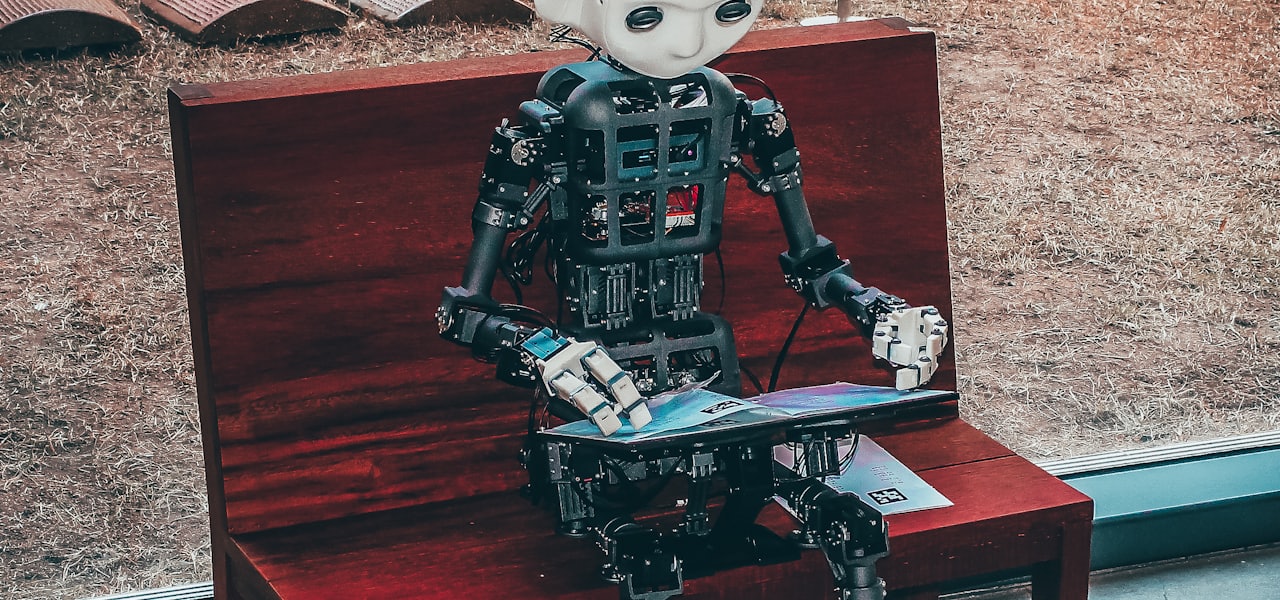
Digital entertainment Industry includes, but is not restricted to, any combination of the following industries (that themselves have a considerable degree of overlap): digital media new media video on demand video games interactive entertainment online gambling mobile entertainment social media streaming services "Digital entertainment", largely a hard to define marketing term, rests upon entertainment technology and ultimately on the enabling basic technologies computers, Internet/World Wide Web, digital rights management, multimedia and streaming media. Apart from pure entertainment, the term rests upon the observation that already in 2011 in the UK, for example, "nearly half of people’s waking hours are spent using media content and communications services" ("screen time"). Digital entertainment is inextricably connected with digital marketing. People who follow influencers on social media for entertainment will receive a fair share of advertising at the same time. Digital merchandise is distributed with every computer game and popup ads or similar are ubiquitous in the online (gaming) world.
Scene text
Scene text is text that appears in an image captured by a camera in an outdoor environment. The detection and recognition of scene text from camera captured images are computer vision tasks which became important after smart phones with good cameras became ubiquitous. The text in scene images varies in shape, font, colour and position. The recognition of scene text is further complicated sometimes by non-uniform illumination and focus. To improve scene text recognition, the International Conference on Document Analysis and Recognition (ICDAR) conducts a robust reading competition once in two years. The competition was held in 2003, 2005 and during every ICDAR conference. International association for pattern recognition (IAPR) has created a list of datasets as Reading systems. == Text detection == Text detection is the process of detecting the text present in the image, followed by surrounding it with a rectangular bounding box. Text detection can be carried out using image based techniques or frequency based techniques. In image based techniques, an image is segmented into multiple segments. Each segment is a connected component of pixels with similar characteristics. The statistical features of connected components are utilised to group them and form the text. Machine learning approaches such as support vector machine and convolutional neural networks are used to classify the components into text and non-text. In frequency based techniques, discrete Fourier transform (DFT) or discrete wavelet transform (DWT) are used to extract the high frequency coefficients. It is assumed that the text present in an image has high frequency components and selecting only the high frequency coefficients filters the text from the non-text regions in an image. == Word recognition == In word recognition, the text is assumed to be already detected and located and the rectangular bounding box containing the text is available. The word present in the bounding box needs to be recognized. The methods available to perform word recognition can be broadly classified into top-down and bottom-up approaches. In the top-down approaches, a set of words from a dictionary is used to identify which word suits the given image. Images are not segmented in most of these methods. Hence, the top-down approach is sometimes referred as segmentation free recognition. In the bottom-up approaches, the image is segmented into multiple components and the segmented image is passed through a recognition engine. Either an off the shelf Optical character recognition (OCR) engine or a custom-trained one is used to recognise the text.
Supertoroid
In geometry and computer graphics, a supertoroid or supertorus is usually understood to be a family of doughnut-like surfaces (technically, a topological torus) whose shape is defined by mathematical formulas similar to those that define the superellipsoids. The plural of "supertorus" is either supertori or supertoruses. The family was described and named by Alan Barr in 1994. Barr's supertoroids have been fairly popular in computer graphics as a convenient model for many objects, such as smooth frames for rectangular things. One quarter of a supertoroid can provide a smooth and seamless 90-degree joint between two superquadric cylinders. However, they are not algebraic surfaces (except in special cases). == Formulas == Alan Barr's supertoroids are defined by parametric equations similar to the trigonometric equations of the torus, except that the sine and cosine terms are raised to arbitrary powers. Namely, the generic point P(u, v) of the surface is given by P ( u , v ) = ( X ( u , v ) Y ( u , v ) Z ( u , v ) ) = ( ( a + C u s ) C v t ( b + C u s ) S v t S u s ) {\displaystyle P(u,v)=\left({\begin{array}{c}X(u,v)\\Y(u,v)\\Z(u,v)\end{array}}\right)=\left({\begin{array}{c}(a+C_{u}^{s})C_{v}^{t}\\(b+C_{u}^{s})S_{v}^{t}\\S_{u}^{s}\end{array}}\right)} where C θ ε = sgn ( cos θ ) | cos θ | ε , S θ ε = sgn ( sin θ ) | sin θ | ε , {\displaystyle {\begin{aligned}C_{\theta }^{\varepsilon }&=\operatorname {sgn} (\cos \theta )\,\left|\,\cos \theta \,\right|^{\varepsilon },\\S_{\theta }^{\varepsilon }&=\operatorname {sgn} (\sin \theta )\ \left|\,\sin \theta \ \right|^{\varepsilon },\end{aligned}}} sgn is the sign function, and the parameters u, v range from 0 to 360 degrees (0 to 2π radians). In these formulas, the parameter s > 0 controls the "squareness" of the vertical sections, t > 0 controls the squareness of the horizontal sections, and a, b ≥ 1 are the major radii in the x and y directions. With s = t = 1 and a = b = R one obtains the ordinary torus with major radius R and minor radius 1, with the center at the origin and rotational symmetry about the z-axis. In general, the supertorus defined as above spans the intervals: − ( a + 1 ) ≤ x ≤ + ( a + 1 ) − ( b + 1 ) ≤ y ≤ + ( b + 1 ) − 1 ≤ z ≤ + 1 {\displaystyle {\begin{array}{rcccl}-(a+1)&\leq &x&\leq &+(a+1)\\[4pt]-(b+1)&\leq &y&\leq &+(b+1)\\[4pt]-1&\leq &z&\leq &+1\end{array}}} The whole shape is symmetric about the planes x = 0, y = 0, and z = 0. The hole runs in the z direction and spans the intervals − ( a − 1 ) ≤ x ≤ + ( a − 1 ) − ( b − 1 ) ≤ y ≤ + ( b − 1 ) − ∞ ≤ z ≤ + ∞ {\displaystyle {\begin{array}{rcccl}-(a-1)&\leq &x&\leq &+(a-1)\\[4pt]-(b-1)&\leq &y&\leq &+(b-1)\\[4pt]-\infty &\leq &z&\leq &+\infty \end{array}}} A curve of constant u on this surface is a horizontal Lamé curve with exponent 2 t , {\displaystyle {\tfrac {2}{t}},} scaled in x and y and displaced in z. A curve of constant v, projected on the plane x = 0 or y = 0, is a Lamé curve with exponent 2 s , {\displaystyle {\tfrac {2}{s}},} scaled and horizontally shifted. If v = 0, the curve is planar and spans the intervals: a − 1 ≤ x ≤ a + 1 − 1 ≤ z ≤ + 1 {\displaystyle {\begin{array}{rcccl}a-1&\leq &x&\leq &a+1\\[4pt]-1&\leq &z&\leq &+1\end{array}}} and similarly if v = 90°, 180°, 270°. The curve is also planar if a = b. In general, if a ≠ b and v is not a multiple of 90 degrees, the curve of constant v will not be planar; and, conversely, a vertical plane section of the supertorus will not be a Lamé curve. The basic supertoroid shape defined above is often modified by non-uniform scaling to yield supertoroids of specific width, length, and vertical thickness. == Plotting code == The following GNU Octave code generates plots of a supertorus:
Computer Law & Security Review
The Computer Law & Security Review is an international peer-reviewed journal published by Elsevier. It has been published six times a year since 1985 and is indexed in Scopus and SSCI. It is accessible to a wide range of professional legal and IT practitioners, businesses, academics, researchers, libraries and organisations in both the public and private sectors. The journal regularly covers: CLSR Briefing with special emphasis on UK/US developments European Union update National news from 10 European jurisdictions Pacific rim news column Refereed practitioner and academic papers on topics such as Web 2.0, IT security, Identity management, ID cards, RFID, interference with privacy, Internet law, telecoms regulation, online broadcasting, intellectual property, software law, e-commerce, outsourcing, data protection and freedom of information and many other topics. The Journal's Correspondent Panel includes more than 40 specialists in IT law and security. Each issue contains articles, case law analysis and current news on information and communications technology. Special Features High quality peer reviewed papers from internationally renowned practitioner and academic experts Latest developments reported in situ by more than 20 leading law firms from around the world Highly experienced and respected editor and correspondents panel Online access to all 23 volumes of CLSR with embedded web links to primary sources Contact details of all authors A pool of expertise that can collectively identify the key topics that need to be examined.
Morphing
Morphing is a special effect in motion pictures and animations that changes (or morphs) one image or shape into another through a seamless transition. Traditionally such a depiction would be achieved through dissolving techniques on film. Since the early 1990s, this has been replaced by computer software to create more realistic transitions. A similar method is applied to audio recordings, for example, by changing voices or vocal lines. == Early transformation techniques == Long before digital morphing, several techniques were used for similar image transformations. Some of those techniques are closer to a matched dissolve – a gradual change between two pictures without warping the shapes in the images – while others did change the shapes in between the start and end phases of the transformation. === Tabula scalata === Known since at least the end of the 16th century, Tabula scalata is a type of painting with two images divided over a corrugated surface. Each image is only correctly visible from a certain angle. If the pictures are matched properly, a primitive type of morphing effect occurs when changing from one viewing angle to the other. === Mechanical transformations === Around 1790 French shadow play showman François Dominique Séraphin used a metal shadow figure with jointed parts to have the face of a young woman changing into that of a witch. Some 19th century mechanical magic lantern slides produced changes to the appearance of figures. For instance a nose could grow to enormous size, simply by slowly sliding away a piece of glass with black paint that masked part of another glass plate with the picture. === Matched dissolves === In the first half of the 19th century "dissolving views" were a popular type of magic lantern show, mostly showing landscapes gradually dissolving from a day to night version or from summer to winter. Other uses are known, for instance Henry Langdon Childe showed groves transforming into cathedrals. The 1910 short film Narren-grappen shows a dissolve transformation of the clothing of a female character. Maurice Tourneur's 1915 film Alias Jimmy Valentine featured a subtle dissolve transformation of the main character from respected citizen Lee Randall into his criminal alter ego Jimmy Valentine. The Peter Tchaikovsky Story in a 1959 TV-series episode of Disneyland features a swan automaton transforming into a real ballet dancer. In 1985, Godley & Creme created a "morph" effect using analogue cross-fades on parts of different faces in the video for "Cry". === Animation === In animation, the morphing effect was created long before the introduction of cinema. A phenakistiscope designed by its inventor Joseph Plateau was printed around 1835 and shows the head of a woman changing into a witch and then into a monster. Émile Cohl's 1908 animated film Fantasmagorie featured much morphing of characters and objects drawn in simple outlines. == Digital morphing == In the early 1990s, computer techniques capable of more convincing results saw increasing use. These involved distorting one image at the same time that it faded into another through marking corresponding points and vectors on the "before" and "after" images used in the morph. For example, one would morph one face into another by marking key points on the first face, such as the contour of the nose or location of an eye, and mark where these same points existed on the second face. The computer would then distort the first face to have the shape of the second face at the same time that it faded the two faces. To compute the transformation of image coordinates required for the distortion, the algorithm of Beier and Neely can be used. === Concerns === In 1993 concerns were raised about the authenticity of digitally altered images arising from morphing. Images of fake "tween" people found half way between two morphed people created a skeptical media long before AI. === Early examples === In or before 1986, computer graphics company Omnibus created a digital animation for a Tide commercial with a Tide detergent bottle smoothly morphing into the shape of the United States. The effect was programmed by Bob Hoffman. Omnibus re-used the technique in the movie Flight of the Navigator (1986). It featured scenes with a computer generated spaceship that appeared to change shape. The plaster cast of a model of the spaceship was scanned and digitally modified with techniques that included a reflection mapping technique that was also developed by programmer Bob Hoffman. The 1986 movie The Golden Child implemented early digital morphing effects from animal to human and back. Willow (1988) featured a more detailed digital morphing sequence with a person changing into different animals. A similar process was used a year later in Indiana Jones and the Last Crusade to create Walter Donovan's gruesome demise. Both effects were created by Industrial Light & Magic, using software developed by Tom Brigham and Doug Smythe (AMPAS). In 1991, morphing appeared notably in the Michael Jackson music video "Black or White" and in the movies Terminator 2: Judgment Day and Star Trek VI: The Undiscovered Country. The first application for personal computers to offer morphing was Gryphon Software Morph on the Macintosh. Other early morphing systems included ImageMaster, MorphPlus and CineMorph, all of which premiered for the Amiga in 1992. Other programs became widely available within a year, and for a time the effect became common to the point of cliché. For high-end use, Elastic Reality (based on MorphPlus) saw its first feature film use in In The Line of Fire (1993) and was used in Quantum Leap (work performed by the Post Group). At VisionArt Ted Fay used Elastic Reality to morph Odo for Star Trek: Deep Space Nine. The Snoop Dogg music video "Who Am I? (What's My Name?)", where Snoop Dogg and the others morph into dogs. Elastic Reality was later purchased by Avid, having already become the de facto system of choice, used in many hundreds of films. The technology behind Elastic Reality earned two Academy Awards in 1996 for Scientific and Technical Achievement going to Garth Dickie and Perry Kivolowitz. The effect is technically called a "spatially warped cross-dissolve". The first social network designed for user-generated morph examples to be posted online was Galleries by Morpheus. In late 1991 Yeti Productions employed a young Stephen Regelous to run it's 486 computer graphics system in Wellington New Zealand. After producer Barry Thomas showed him Michael Jackson's "Black or White", Regelous wrote 10,000 lines of C++ code of triangle-based digital morphing software. Together they created morphing based TV commercials for The NZ Cancer Society, Fit food, Salvation Army and others. The Fit food commercial employed morphing with 35mm, pin registered, digitally controlled motion control designed and made by Russell Collins with software by Stephen Regelous. In Taiwan, Aderans, a hair loss solutions provider, did a TV commercial featuring a morphing sequence in which people with lush, thick hair morph into one another, reminiscent of the end sequence of the "Black or White" video. === Present use === Morphing algorithms continue to advance and programs can automatically morph images that correspond closely enough with relatively little instruction from the user. This has led to the use of morphing techniques to create convincing slow-motion effects where none existed in the original film or video footage by morphing between each individual frame using optical flow technology. Morphing has also appeared as a transition technique between one scene and another in television shows, even if the contents of the two images are entirely unrelated. The algorithm in this case attempts to find corresponding points between the images and distort one into the other as they crossfade. While perhaps less obvious than in the past, morphing is used heavily today. Whereas the effect was initially a novelty, today, morphing effects are most often designed to be seamless and invisible to the eye. A particular use for morphing effects is modern digital font design. Using morphing technology, called interpolation or multiple master tech, a designer can create an intermediate between two styles, for example generating a semibold font by compromising between a bold and regular style, or extend a trend to create an ultra-light or ultra-bold. The technique is commonly used by font design studios. == Software == After Effects Animate Elastic Reality FantaMorph Gryphon Software Morph Morph Age Morpheus Nuke SilhouetteFX
Seq2seq
Seq2seq is a family of machine learning approaches used for natural language processing. Originally developed by Lê Viết Quốc, a Vietnamese computer scientist and a machine learning pioneer at Google Brain, this framework has become foundational in many modern AI systems. Applications include language translation, image captioning, conversational models, speech recognition, and text summarization. Seq2seq uses sequence transformation: it turns one sequence into another sequence. == History == One naturally wonders if the problem of translation could conceivably be treated as a problem in cryptography. When I look at an article in Russian, I say: 'This is really written in English, but it has been coded in some strange symbols. I will now proceed to decode. seq2seq is an approach to machine translation (or more generally, sequence transduction) with roots in information theory, where communication is understood as an encode-transmit-decode process, and machine translation can be studied as a special case of communication. This viewpoint was elaborated, for example, in the noisy channel model of machine translation. In practice, seq2seq maps an input sequence into a real-numerical vector by using a neural network (the encoder), and then maps it back to an output sequence using another neural network (the decoder). The idea of encoder-decoder sequence transduction had been developed in the early 2010s. The papers most commonly cited as the originators that produced seq2seq are two papers from 2014. In the seq2seq as proposed by them, both the encoder and the decoder were LSTMs. This had the "bottleneck" problem, since the encoding vector has a fixed size, so for long input sequences, information would tend to be lost, as they are difficult to fit into the fixed-length encoding vector. The attention mechanism, proposed in 2014, resolved the bottleneck problem. They called their model RNNsearch, as it "emulates searching through a source sentence during decoding a translation". A problem with seq2seq models at this point was that recurrent neural networks are difficult to parallelize. The 2017 publication of Transformers resolved the problem by replacing the encoding RNN with self-attention Transformer blocks ("encoder blocks"), and the decoding RNN with cross-attention causally-masked Transformer blocks ("decoder blocks"). === Priority dispute === One of the papers cited as the originator for seq2seq is (Sutskever et al 2014), published at Google Brain while they were on Google's machine translation project. The research allowed Google to overhaul Google Translate into Google Neural Machine Translation in 2016. Tomáš Mikolov claims to have developed the idea (before joining Google Brain) of using a "neural language model on pairs of sentences... and then [generating] translation after seeing the first sentence"—which he equates with seq2seq machine translation, and to have mentioned the idea to Ilya Sutskever and Quoc Le (while at Google Brain), who failed to acknowledge him in their paper. Mikolov had worked on RNNLM (using RNN for language modelling) for his PhD thesis, and is more notable for developing word2vec. == Architecture == The main reference for this section is. === Encoder === The encoder is responsible for processing the input sequence and capturing its essential information, which is stored as the hidden state of the network and, in a model with attention mechanism, a context vector. The context vector is the weighted sum of the input hidden states and is generated for every time instance in the output sequences. === Decoder === The decoder takes the context vector and hidden states from the encoder and generates the final output sequence. The decoder operates in an autoregressive manner, producing one element of the output sequence at a time. At each step, it considers the previously generated elements, the context vector, and the input sequence information to make predictions for the next element in the output sequence. Specifically, in a model with attention mechanism, the context vector and the hidden state are concatenated together to form an attention hidden vector, which is used as an input for the decoder. The seq2seq method developed in the early 2010s uses two neural networks: an encoder network converts an input sentence into numerical vectors, and a decoder network converts those vectors to sentences in the target language. The Attention mechanism was grafted onto this structure in 2014 and is shown below. Later it was refined into the encoder-decoder Transformer architecture of 2017. === Training vs prediction === There is a subtle difference between training and prediction. During training time, both the input and the output sequences are known. During prediction time, only the input sequence is known, and the output sequence must be decoded by the network itself. Specifically, consider an input sequence x 1 : n {\displaystyle x_{1:n}} and output sequence y 1 : m {\displaystyle y_{1:m}} . The encoder would process the input x 1 : n {\displaystyle x_{1:n}} step by step. After that, the decoder would take the output from the encoder, as well as the
Datasource
A datasource or DataSource is a name given to the connection set up to a database from a server. The name is commonly used when creating a query to the database. The data source name (DSN) need not be the same as the filename for the database. For example, a database file named friends.mdb could be set up with a DSN of school. Then DSN school would be used to refer to the database when performing a query. == Sun's version of DataSource [1] == A factory for connections to the physical data source that this DataSource object represents. An alternative to the DriverManager facility, a DataSource object is the preferred means of getting a connection. An object that implements the DataSource interface will typically be registered with a naming service based on the Java Naming and Directory Interface (JNDI) API. The DataSource interface is implemented by a driver vendor. There are three types of implementations: Basic implementation — produces a standard Connection object Connection pooling implementation — produces a Connection object that will automatically participate in connection pooling. This implementation works with a middle-tier connection pooling manager. Distributed transaction implementation — produces a Connection object that may be used for distributed transactions and almost always participates in connection pooling. This implementation works with a middle-tier transaction manager and almost always with a connection pooling manager. A DataSource object has properties that can be modified when necessary. For example, if the data source is moved to a different server, the property for the server can be changed. The benefit is that because the data source's properties can be changed, any code accessing that data source does not need to be changed. A driver that is accessed via a DataSource object does not register itself with the DriverManager. Rather, a DataSource object is retrieved through a lookup operation and then used to create a Connection object. With a basic implementation, the connection obtained through a DataSource object is identical to a connection obtained through the DriverManager facility. == Sun's DataSource Overview [2] == A DataSource object is the representation of a data source in the Java programming language. In basic terms, a data source is a facility for storing data. It can be as sophisticated as a complex database for a large corporation or as simple as a file with rows and columns. A data source can reside on a remote server, or it can be on a local desktop machine. Applications access a data source using a connection, and a DataSource object can be thought of as a factory for connections to the particular data source that the DataSource instance represents. The DataSource interface provides two methods for establishing a connection with a data source. Using a DataSource object is the preferred alternative to using the DriverManager for establishing a connection to a data source. They are similar to the extent that the DriverManager class and DataSource interface both have methods for creating a connection, methods for getting and setting a timeout limit for making a connection, and methods for getting and setting a stream for logging. Their differences are more significant than their similarities, however. Unlike the DriverManager, a DataSource object has properties that identify and describe the data source it represents. Also, a DataSource object works with a Java Naming and Directory Interface (JNDI) naming service and can be created, deployed, and managed separately from the applications that use it. A driver vendor will provide a class that is a basic implementation of the DataSource interface as part of its Java Database Connectivity (JDBC) 2.0 or 3.0 driver product. What a system administrator does to register a DataSource object with a JNDI naming service and what an application does to get a connection to a data source using a DataSource object registered with a JNDI naming service are described later in this chapter. Being registered with a JNDI naming service gives a DataSource object two major advantages over the DriverManager. First, an application does not need to hardcode driver information, as it does with the DriverManager. A programmer can choose a logical name for the data source and register the logical name with a JNDI naming service. The application uses the logical name, and the JNDI naming service will supply the DataSource object associated with the logical name. The DataSource object can then be used to create a connection to the data source it represents. The second major advantage is that the DataSource facility allows developers to implement a DataSource class to take advantage of features like connection pooling and distributed transactions. Connection pooling can increase performance dramatically by reusing connections rather than creating a new physical connection each time a connection is requested. The ability to use distributed transactions enables an application to do the heavy duty database work of large enterprises. Although an application may use either the DriverManager or a DataSource object to get a connection, using a DataSource object offers significant advantages and is the recommended way to establish a connection. Since 1.4 Since Java EE 6 a JNDI-bound DataSource can alternatively be configured in a declarative way directly from within the application. This alternative is particularly useful for self-sufficient applications or for transparently using an embedded database. == Yahoo's version of DataSource [3] == A DataSource is an abstract representation of a live set of data that presents a common predictable API for other objects to interact with. The nature of your data, its quantity, its complexity, and the logic for returning query results all play a role in determining your type of DataSource. For small amounts of simple textual data, a JavaScript array is a good choice. If your data has a small footprint but requires a simple computational or transformational filter before being displayed, a JavaScript function may be the right approach. For very large datasets—for example, a robust relational database—or to access a third-party webservice you'll certainly need to leverage the power of a Script Node or XHR DataSource.